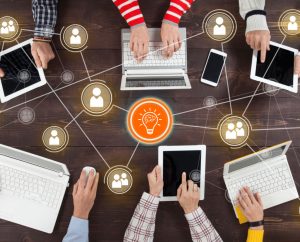
IoT refers to the Internet of Things, which means that devices, physical objects, vehicles, and appliances all have sensors with embedded software that enables the exchange of data over a network.
The one aspect that makes IoT unique is its intelligence. It has enabled a connected lifestyle, as the everyday things we use are now smart enough to sense their environment. It learns from the connected data and acts independently without any support, enabling a tech-driven lifestyle.
Moving on, since IoT sends and receives data, enables features like cloud-based processing, remote control, and communication with other systems, it needs an internet connection to carry out all these processes smoothly.
Without an internet connection, its functionality is severely restricted, which limits its use and management from a remote location. I’ve been using IoT devices for my home, which include smart lighting, thermostats, and security systems, and for that, I would recommend that you subscribe to Xfinity Internet since it offers 99.9% reliability with minimal disruption, which allows your IoT devices to work seamlessly without any interruption.
With that in mind, let’s take a look at how the Internet of Things is widely used in many industries, enhancing efficiency, providing real-time insights, and enabling innovations. In this article, I will let you know how it is used in different fields with some supporting stats.
Usage of the Internet of Things for Homes
Many people in the US are using IoT devices in their homes. The adoption has increased among the tech-savvy people, especially the younger generation. Between 2023 and 2028, the US smart home market is expected to grow by 20.4 billion dollars (+58.84%), and according to a survey, between 45% and 93% of US households own at least one smart home device in their homes.
And some projections predict that around 90% of US homes will have smart technology by 2029. Let’s dive in and see how we can incorporate IoT devices into our homes.
Smart Door Locks
Smart door locks and motion sensors are one of the most famous examples of IoT smart home devices. This enables you to lock and unlock the home from anywhere from your smartphone application. You can also use voice assistants to manage the smart lock.
Here are some of the advantages of using a smart door lock:
- Contributes to the home security.
- Perfectly integrates with a third-party security service.
- Easy to manage as compared to traditional security systems.
Smart Kitchen
Nowadays, in modern smart homes, I’ve been witnessing an addition of smart kitchen appliances. According to statistics, the US smart kitchen appliances market is expected to reach $12.6 billion in 2025 and an estimated 49.2 million households adopting it by 2029.
Smart Kitchen appliances are reshaping the world of smart home technology, and we can witness a drastic change that how we engage with our kitchens. These small innovations represent a big revolution in culinary technology.
Smart kitchen appliances consist of Built-in Cameras in Refrigerators that allow for remote watching of what’s inside the fridge via mobile applications. It also integrates voice control that allows voice-enabled features, enabling hands-free control.
Smart Entertainment
A smart entertainment system is an interconnected home entertainment device that can be controlled by a smartphone application or voice assistant.
This integrates different components like smart TVs, lighting, speakers, and various streaming services to create an automated, centralized, and customized viewing and listening experience.
Usage of The Internet of Things in Health Care
Internet of Things devices in the medical sector are known as Internet of Medical Things (IoMT). It is said to be one of the fastest-growing IoT markets and is expected to reach 176 billion Dollars by 2026.
IoMT is also called remote patient monitoring, which allows for to collection of patients’ medical data like body temperature and heart rate.
There are many other examples of how IoMT is used, for example:
Hygiene Monitoring
IoT devices in hospitals tell people to wash their hands when they enter hospital rooms. The device gives them instructions to sanitize their hands, which lowers the risk of a patient getting infected.
Mood Monitoring
Figuring out the patient’s mood has always been a challenge for doctors. They usually ask patients how they feel, and most of the time, patients lie about their mood due to shame or fear of judgment.
Mood-aware IoT device can cater to a challenge like this. It records patients’ blood pressure and heart rate and can predict a patient’s mental state.
Moreover, advanced IoT devices that are used for mood monitoring can even track the state of a patient’s eyes.
Robotic Surgeries
Robotic surgeries are growing in the US, with estimation of a 10.5% compound annual growth rate (CAGR) by 2030.
Interestingly, 15% of general surgeries were assisted by robots in 2023, with this figure expected to increase in the next five years.
By inserting tiny robots inside the human body, surgeons can do complex procedures that would have been difficult to perform by using human hands.
Usage of The Internet of Things in the Financial Sector
Globally, IoT in the banking and financial sector is experiencing growth. Its size in 2023 ranged from $1.27 billion to $57.55 billion, and it is predicted to go between $38.52 billion and $180.61 billion by 2030.
IoT in banking is the interconnected web of IoT devices that transmit and gather data in a cloud, to elevate the banking experience for the customers and bankers.
This growth is experienced by the increased use of IoT for personalized customer experience, enhanced security, operational efficiency, and real-time transaction monitoring. Here are some examples of how IoT is used in financial sectors:
Smart ATMs
ATMs are now more secure and convenient because of the incorporation of IoT devices. Sensors are installed to monitor door motions, light, and temperature.
The market growth of smart ATMs is expected to grow at a CAGR of 5.8% between 2025 and 2029. And according to some analysts, it is predicted to grow from 6.89 billion in 2024 to 12.45 billion dollars by 2033, at a CAGR of 7.12%.
Alarms are automatically turned on in case of any uncertain conditions. Lights, alarms, aircons, and other connected devices can be controlled remotely.
Customers can operate the ATM through their smart mobile app. It is much safer and convenient to make transactions because of IoT technology.
Touchless Payments
Banks are enabling touchless transactions through wearable devices. Users can use their smart rings, key fobs, and smartwatches to make payments.
Apart from this, the transactions are now also done by using voice commands through cloud-based virtual tools like Google Assistant or Alexa.
Moreover, people can now customize their shopping process by enabling commands to buy a product and make payments later. This feature is described as Buy Now, Pay Later (BNPL), which is supported by artificial intelligence (AI).
Lastly, smartphones and Smartwatches that have Near Field Communication NFC can make contactless transactions, which offer users a convenient and seamless financial experience. As the IoT technology evolves, we can experience more innovative payment methods in the future.
Incorporation of Blockchain in Banking
The global blockchain in the banking and financial sector market is expected to grow from $6.98 billion in 2024 to $10.65 billion in 2025, with a CAGR of 52.6%.
The combination of IoT and blockchain technology is revolutionizing transactions and data management in many ways, for example:
- Integrating IoT with blockchain enables businesses to track financial transactions in real time, with no need for a middleman, keeping the data safe.
- IoT-backed blockchain solutions, like smart contracts, make international transactions easy and lower the maintenance costs.
Financial firms are now heavily investing in blockchain and making IoT-driven blockchain solutions to make the process easy and safe for their users.
IoT is reshaping the way we live, making our lives smarter, health stronger, and finances safer. It’s not a technology but a future connecting us all.
Frequently Asked Questions
What internet connection type is recommended to use the IoT technology?
There is no recommended connection type. However, choosing the ideal connection type for IoT depends on data transfer speed, requirements for range, cost, and power consumption.
What internet speed is recommended to use IoT devices in the home?
25 Mbps of download and 3-5 Mbps upload is recommended. Moreover, 100 Mbps download and 10 Mbps upload are more than enough for a typical smart home to work properly.
How is IoT used in the construction industry?
It is used in the construction industry to improve safety, efficiency, and project management by monitoring connected devices like sensors, wearables, drones, and asset trackers.
What are the four important features of IoT?
The four important features or components of IoT are sensors, connectivity, data processing, and user interfaces. Each of them plays a vital role in making the IoT solutions successful.